
Investing in property is a cornerstone of wealth creation for many UK landlords, but moving beyond single buy-to-let properties into more complex assets can feel daunting. This is particularly true for multi-unit blocks, an asset class that offers significant potential but requires a specialised approach to financing. With UK landlords securing over £8.8 billion in new Buy-to-Let lending in Q2 2025, understanding the nuances of Multi-Unit lending structures is becoming increasingly essential.
This guide will demystify the world of Multi-Unit Block Mortgages, often referred to as MUFBs or MUFBs mortgages. We will explore what these properties are, how they differ from other rental types, and the specific financial products designed to fund them. Whether you are a seasoned portfolio landlord or exploring your first multi-unit investment in England and Wales, this article provides the essential insights you need to navigate the market with confidence.
The article is updated as of Nov 27, 2025
What is a multi-unit freehold?
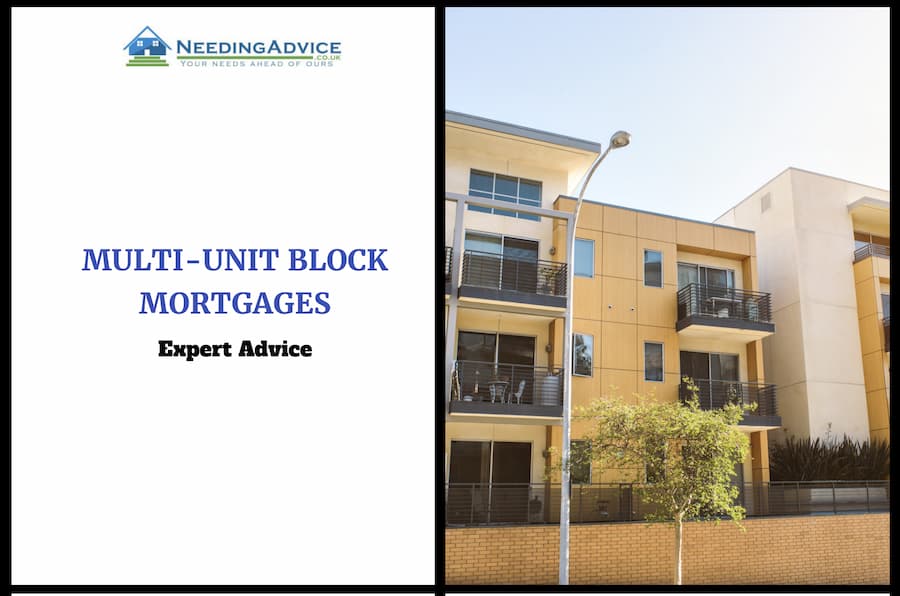
A multi-unit freehold block (MUFB) is a single property that contains multiple, separate, and self-contained residential units, all held under a single freehold title. This is a crucial distinction: unlike a typical block of flats where each unit is sold off on a leasehold basis, the owner of a MUFB owns the entire building and the land it stands on outright.
Common examples of MUFB properties include:
- A large Victorian house converted into several self-contained flats.
- A purpose-built block of apartments where all units are retained for rent by the freeholder.
- A terrace of houses held under one single freehold title.
The defining characteristic of these multi-unit blocks is that each unit is independent, with its own private kitchen, bathroom, and living space. This structure sets them apart from houses in multiple occupation (HMOs), where tenants from different households share facilities like kitchens and bathrooms. Understanding this difference is vital, as it impacts everything from tenant agreements to licensing and mortgage lending criteria.
Can you get a mortgage on a freehold property?
Yes, you can absolutely get a mortgage on a freehold property, but financing a multi-unit block requires a specialist approach. Most high-street banks and mainstream lenders are geared towards standard residential or single buy to let mortgages. They often lack the specific underwriting expertise to assess the complex income streams and property structures of a MUFB.
This is where a specialist mortgage lender becomes essential. These lenders have dedicated departments and underwriters experienced in evaluating MUFB properties. They understand the nuances of assessing rental income from multiple units, the legal implications of a single freehold title covering several dwellings, and the specific risks and rewards involved. Consequently, their lender criteria are designed specifically for this asset class, offering a pathway to finance that is often inaccessible through standard channels.
How do I apply for a multi-unit freehold mortgage?
The application process for a MUFB mortgage is more involved than for a standard buy-to-let property, which is why the role of experienced mortgage brokers is paramount. A specialist broker acts as your guide and advocate, navigating the complex market to find the right lender and product for your circumstances.
The typical application journey involves these key stages:
- Initial Assessment: A broker will first conduct a detailed review of your financial situation, landlord experience, and credit score. They will also analyse the property details, including the number of units, projected rental income, and its location.
- Market Search: Leveraging their industry knowledge and relationships, the broker will identify specialist lenders whose criteria align with your profile and the property’s characteristics.
- Mortgage in Principle (MIP): Once a suitable lender is found, the broker will help you secure an MIP. This is a conditional offer that confirms the lender is likely to approve your application, strengthening your position if you are purchasing the property.
- Full Application & Underwriting: This involves submitting a detailed application with all supporting documents. The lender will conduct its full eligibility checks, including an affordability assessment and a physical valuation of the property, before issuing a formal mortgage offer.
Multi-Unit Freehold Mortgages
The mortgage products available for MUFBs are diverse and cater to different investment strategies. While they fall under the umbrella of commercial or specialist buy-to-let products, they offer a range of options beyond a standard mortgage.
Key types of financing for MUFB mortgages include:
- Term Mortgages: These are the most common type, functioning like a standard buy-to-let mortgage over a set term (e.g., 25 years). They are ideal for landlords looking to acquire and hold a property for long-term rental income.
- Bridging Loans: If a property requires significant refurbishment before it can be rented out, bridging loans (or bridging finance) can provide short-term capital. This allows you to purchase and renovate the property, after which you can refinance onto a long-term MUFB mortgage.
- Refinancing Loans: Existing MUFB owners can use refinancing loans to release equityThe difference between the value of the property and the amo... More from their property for further investment or to secure a better interest rate. This is also the standard exit strategy for those who initially used bridging loans.
- Development Finance: For larger-scale projects, such as building a new block of flats from the ground up or undertaking a major conversion project, development finance provides the necessary funding in stages.
Average Gross Yield:
One of the primary attractions of investing in a multi-unit freehold block is the potential for superior rental yields compared to single-unit properties. By spreading income across multiple tenancies, landlords can achieve economies of scale. Data consistently shows that multi-unit properties outperform “vanilla” buy-to-let assets in this regard. For example, in the final quarter of 2019, multi-unit properties demonstrated an average gross yield of 6.7%, significantly higher than the 5.8% seen from standard BTL properties during the same period. This enhanced return is a powerful incentive for investors willing to manage a more complex asset.
Multi-unit rates and terms
The mortgage rates for MUFBs are typically higher than those for standard single-unit BTLs, reflecting the specialised nature and perceived higher complexity of the asset. However, a competitive interest rate is achievable, especially for experienced landlords with a strong financial profile.
Several factors influence the rates and terms offered:
- Loan to ValueThe ratio of the mortgage amount to the value of the propert... More (LTV): This is the percentage of the property’s value that the lender is willing to finance. For MUFBs, the maximum loan to value is often around 75%, meaning you will typically need a deposit of at least 25%. Lower LTVs generally result in more favourable rates.
- Product Type: A Fixed Rate mortgage provides certainty over payments for a set period (e.g., 2, 5, or 10 years), which is popular among investors for budgeting purposes. Variable or tracker rates may offer lower initial rates but can fluctuate.
- Maximum Loan: Each lender will have a Maximum Loan amount they are willing to offer, which can range from a few hundred thousand to several million pounds, depending on the lender’s appetite and the property’s strength.
- Repayment Basis: Many investors opt for financing on an interest-only basis to maximise monthly cash flow. Capital and repayment options are also available.
- Stress Test: Lenders apply a ‘stress test’ to ensure the rental income can cover the mortgage payments even if interest rates rise. This calculation is a key part of the affordability assessment.
What are the Benefits of a MUFB?
Investing in a multi-unit freehold block offers several strategic advantages for portfolio landlords over single-unit properties.
- Reduced Risk from Void Periods: One of the most significant benefits is the mitigation of risk from void periods. If one unit is empty, you still have rental income from the others, providing a much more stable and predictable cash flow compared to a single property where a void means 100% loss of income.
- Economies of Scale: Managing multiple units within one building is more efficient. Costs for maintenance, repairs, and management can be consolidated. You only need one roof, one set of foundations, and often one insurance policy, which can be more cost-effective than insuring multiple separate properties. Engaging a single property management company for the block also streamlines operations.
- Higher Rental Yield and Capital Values: As discussed, MUFBs often generate higher rental yields. Furthermore, owning the entire freehold gives you complete control over the property, allowing you to make improvements that can enhance its overall capital values without needing permission from a freeholder.
- Simplified Transaction: Acquiring multiple units in one transaction can be more efficient. You deal with one seller, one legal process, and potentially pay a single Stamp DutyA tax paid by the buyer when purchasing a property. More land tax bill, which can be more straightforward than buying multiple individual properties.
Where can I get a MUFB from?
Securing MUFB mortgages requires approaching the right lenders, as this is a specialist area of the market. The main sources of finance are:
- Specialist Lenders: These are non-high-street providers who have carved out a niche in complex buy to let mortgages. Lenders like Landbay, Aldermore, and Paragon have specific mortgage products designed for multi-unit blocks.
- Challenger Banks: Many newer, more agile banks are active in this space, often offering flexible lender criteria and a willingness to assess complex cases on their individual merits.
- Commercial Lenders: For very large or complex blocks (e.g., those with more than 10-20 units or semi-commercial elements), a commercial finance provider may be the most appropriate source of funding.
Due to the fragmented nature of this market, it is nearly impossible for an individual investor to access and compare all available options. This underscores the importance of using specialist mortgage brokers who have whole-of-market access and deep relationships with the key lenders in this sector. They can package your application effectively and present it to the lenders most likely to approve it.
HMOs vs. MUFBs
It is common for investors to confuse houses in multiple occupation (HMOs) with MUFBs, but they are fundamentally different in structure, management, and financing.
- Structure: The key difference is the nature of the accommodation. A MUFB consists of multiple self-contained flats, each with its own front door, kitchen, and bathroom. An HMO involves shared accommodation, where tenants rent individual rooms but share common facilities.
- Tenancy Agreements: In a MUFB, each flat is typically let on a separate Assured Shorthold Tenancy (AST) to an individual, couple, or family. In an HMO, tenants may have individual ASTs for their rooms or a joint tenancy for the whole property.
- Licensing and Regulations: While both property types are subject to stringent health and safety regulations, HMO regulations are often more prescriptive. Many HMOs require a mandatory HMO Licence from the local authority, a requirement that does not typically apply to a standard MUFB (unless an individual flat within the block is itself sublet as an HMO). It’s crucial to check local licensing requirements.
Lenders view these two asset types differently, with distinct criteria and products for each. Misclassifying a property can lead to a declined mortgage application, making a clear understanding essential.
Multi-Unit Freehold Mortgages: Summary and Key Takeaways
Investing in a multi-unit freehold block offers a powerful opportunity for landlords to scale their portfolios, enhance rental yields, and build a more resilient income stream. However, success in this market hinges on understanding its unique characteristics and securing the right type of specialist finance.
Here are the crucial takeaways:
- MUFBs are a Specialist Asset: They are distinct from both single BTLs and HMOs, requiring a tailored approach to financing through a specialist mortgage lender.
- Brokers are Essential: Navigating the complex world of MUFB mortgages is best done with an expert mortgage broker who can access the right mortgage products and lenders.
- The Benefits are Significant: From reduced risk during void periods to higher yields and greater management efficiency, the advantages are compelling for serious investors.
- Due Diligence is Key: Always verify the property’s legal structure, and for conversions, ensure all necessary planning permissions and building regulations are in place.
- Consider Your Structure: For tax efficiency and liability protection, many landlords choose to hold properties within a Special Purpose Vehicle (SPV), a topic worth discussing with your accountant and broker.
By arming yourself with this knowledge, you are well-equipped to explore the lucrative opportunities that multi-unit blocks present and take the next step in your property investment journey.

Damian Youell
Damian is the founder of NeedingAdvice.co.uk and the firm’s Senior Mortgage Broker. He specialises in helping clients across the UK with straightforward and complex mortgage cases, including self-employed applications, adverse credit, buy-to-let, remortgages and first-time buyer mortgages.
Alongside mortgage advice, Damian also supports business owners with protection planning, including Relevant Life Policies, Shareholder Protection and Keyperson Cover.
Read independent client feedback and verified reviews for Damian and the NeedingAdvice.co.uk team below.
In short: a MUFB, or multi-unit freehold block, is a single freehold title containing two or more self-contained units – typically a converted house or a purpose-built block held on one title rather than split into individual leaseholds. It is financed on a specialist buy-to-let mortgage assessed on the block’s total rental income, not on a standard residential or single-unit BTL product.
MUFB mortgage criteria: what specialist lenders assess
MUFB lending sits outside mainstream buy-to-let, so the criteria are set by specialist and limited-company lenders rather than high-street banks. The areas below are the ones that determine whether a block is fundable at all.
| Criteria area | What lenders typically look at |
|---|---|
| Number of units | Most specialist ranges start at two units. Lenders set an upper limit per block and often a separate limit on total units across your portfolio. |
| Title structure | One freehold title covering all units. Where individual leases have been created out of the freehold, lenders will want to understand who holds them and on what terms. |
| Self-containment | Each unit needs its own kitchen, bathroom and lockable entrance door. Shared facilities usually push the property into HMO territory instead. |
| Tenancy arrangement | Separate ASTs per unit is the standard expectation. A single AST across the whole block is treated differently and narrows the lender list. |
| Rental assessment | Aggregate rent across all units, tested against the lender’s rental cover requirement. Some lenders also apply a per-unit minimum value or minimum rent. |
| Borrowing entity | Personal name or an SPV limited company. SPV lending is common in this space and has different tax and underwriting consequences. |
| Planning and building regs | Evidence that any conversion had the necessary planning permissionPermission granted by the local authority for a property to ... More and building regulations sign-off. Missing paperwork is the most common reason a MUFB case stalls. |
| Valuation basis | Often the lower of bricks-and-mortar value and investment value. An investment valuation on a small block can come in below the aggregate of the individual units. |
MUFB compared with an HMO and with separate leasehold flats
| MUFB | HMO | Separate leasehold flats | |
|---|---|---|---|
| Title | One freehold, multiple units | One title, one dwelling | Individual leases, separate titles |
| Facilities | Self-contained per unit | Shared kitchen or bathroom | Self-contained per flat |
| Tenancies | One AST per unit | One AST per room or per household | One AST per flat |
| Licensing | Generally outside HMO licensing | Mandatory or additional licensing may apply | Not applicable |
| Finance | One specialist BTL facility | Specialist HMO BTL | One mortgage per flat |
| Exit | Sell as a block, or split the title first | Sell as a single property | Sell flats individually |
The practical appeal of a MUFB is that one facility, one valuation and one set of legal work covers several rental units, and a void in one unit does not stop the block generating income. The practical cost is a narrower lender panel, a narrower buyer pool on exit, and stricter scrutiny of the conversion paperwork.
Splitting the title, and why it matters before you buy
Blocks held on a single freehold can in principle be split into individual leasehold titles, which usually raises the combined value and widens the resale market. It is a legal process with cost and time attached, and most lenders will not permit a title split while their charge is in place without consent. If splitting the title is part of your exit plan, it is worth establishing the lender’s position on it before you commit, rather than discovering the restriction at redemption.
Related property finance guides
- Buy to let mortgages explained
- HMO mortgages
- SPV and holding company structures for property
- Independent, whole-of-market mortgage advice
- About Damian Youell CeMAP, Senior Mortgage Adviser
Reviewed by Damian Youell CeMAP, Senior Mortgage Adviser at Needing Advice. Your property may be repossessed if you do not keep up repayments on your mortgage.